Underused Spaces Turned Into Functional Rooms
Basement Finishing & Garage Conversions in Asheville for homes needing additional living space without building outward or upward
Basements and garages become viable living spaces when moisture control, insulation, and egress requirements are addressed before finishes go in. You notice these spaces remain unused because concrete floors stay cold, walls feel damp, or the area lacks the heating and lighting needed for comfortable occupancy. Building Carolinas Construction & Remodeling converts these areas into home offices, guest suites, or entertainment spaces by installing vapor barriers, insulating foundation walls, and adding egress windows where codes require secondary exits from sleeping areas.
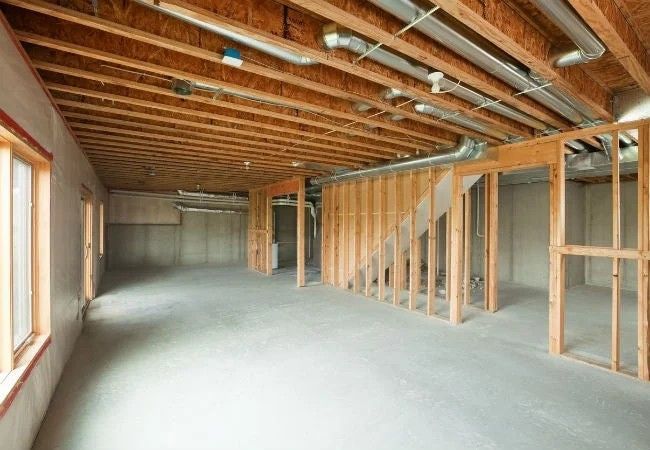
Basement finishing involves sealing foundation cracks, installing drainage systems if water seepage occurs, framing walls with pressure-treated bottom plates, and running electrical and HVAC to create climate-controlled space. Garage conversions require insulating exterior walls and overhead doors, adding drywall and flooring over concrete slabs, and sometimes relocating electrical panels or water heaters to maintain code clearances. Both types of projects must address moisture migration through concrete, particularly in Asheville's climate where seasonal humidity and groundwater levels fluctuate.
Request a consultation to assess moisture conditions and discuss layout options for your basement or garage space.
What Changes After Lower-Level Space Gets Finished
Finishing work starts with testing for moisture intrusion using plastic sheet tests or moisture meters to determine whether water management systems are needed before framing begins. Insulation goes on foundation walls using closed-cell foam or rigid foam boards that resist moisture, and subfloor systems are installed over concrete to provide thermal breaks and level surfaces for finished flooring. Egress windows are cut into foundation walls where bedrooms are planned, with window wells and drainage installed outside to prevent water accumulation.
After completion, you'll see finished rooms that maintain consistent temperatures without the cold floors and damp smell that characterized the unfinished space. Walls remain dry during humid summer months, and heating costs do not spike from trying to warm poorly insulated areas. Basements gain natural light from egress windows, and converted garages no longer feel like detached storage spaces but instead integrate with the main living area through temperature control and finish quality.
Basement and garage conversion projects include moisture mitigation, framing, insulation, electrical, drywall, and flooring installation, but do not include plumbing rough-in for bathrooms or structural modifications unless specified separately. Furniture, window treatments, and decorative finishes are handled by the homeowner after construction is complete. Design choices about room layout and finish materials affect both upfront cost and how well the space functions for its intended purpose over time.
Common Questions About This Service
Homeowners in Asheville and surrounding communities often ask about moisture prevention, egress requirements, and how finishing lower-level spaces affects heating and cooling costs.
What moisture problems need to be fixed before finishing a basement?
Active water seepage, foundation cracks, and high humidity levels must be addressed before insulation and drywall are installed, or moisture will become trapped inside wall cavities and cause mold growth and material deterioration.
How does finishing a garage affect the home's heating system?
Adding conditioned space increases heating and cooling loads, often requiring HVAC system evaluation to confirm existing equipment can handle the added square footage without losing performance in other areas of the home.
Why are egress windows required in finished basements?
Building codes require secondary exits from sleeping areas so occupants can escape during emergencies when interior stairs are blocked, with window wells sized to allow adults to climb out safely.
What insulation works best for basement walls in areas with seasonal moisture?
Closed-cell spray foam or rigid foam boards resist moisture absorption better than fiberglass batts, which lose insulating value when damp and can harbor mold if water enters the wall cavity.
When does a garage conversion make sense versus building an addition?
Conversions work well when the existing garage structure is sound, you have alternative parking or storage solutions, and adding square footage through new construction is limited by lot size or budget constraints.
Building Carolinas Construction & Remodeling completes basement finishing and garage conversion projects throughout Asheville for homeowners ready to expand functional living space. Contact us at (828) 329-3605 to schedule an evaluation and discuss design options for your lower-level area.