Homes Built for How Mountain Weather Actually Works
New Construction Services in Asheville for property owners building custom residential spaces or new living structures
Western North Carolina properties face freeze-thaw cycles, significant rainfall totals, and elevation changes that affect drainage, foundation design, and exterior material selection. Building Carolinas Construction & Remodeling provides new construction services in Asheville, Flat Rock, Brevard, Weaverville, and surrounding areas that account for these regional conditions during planning, framing, and finish installation phases. You need custom residential construction when building on wooded lots that require tree clearing coordination, when mountain topography affects foundation options, or when energy efficiency goals require insulation and air sealing strategies beyond standard code minimums.
The construction process begins with site evaluation and layout planning, then moves through foundation work, framing, exterior envelope installation, mechanical rough-ins, insulation, and interior finish work. Each phase is sequenced so that weather-sensitive exterior work happens before interior finishes begin and so that inspections occur at stages where building systems remain accessible for review.
Arrange a construction consultation to review your property site conditions and discuss layout options for your new residential build.
How New Construction Addresses Site-Specific Conditions
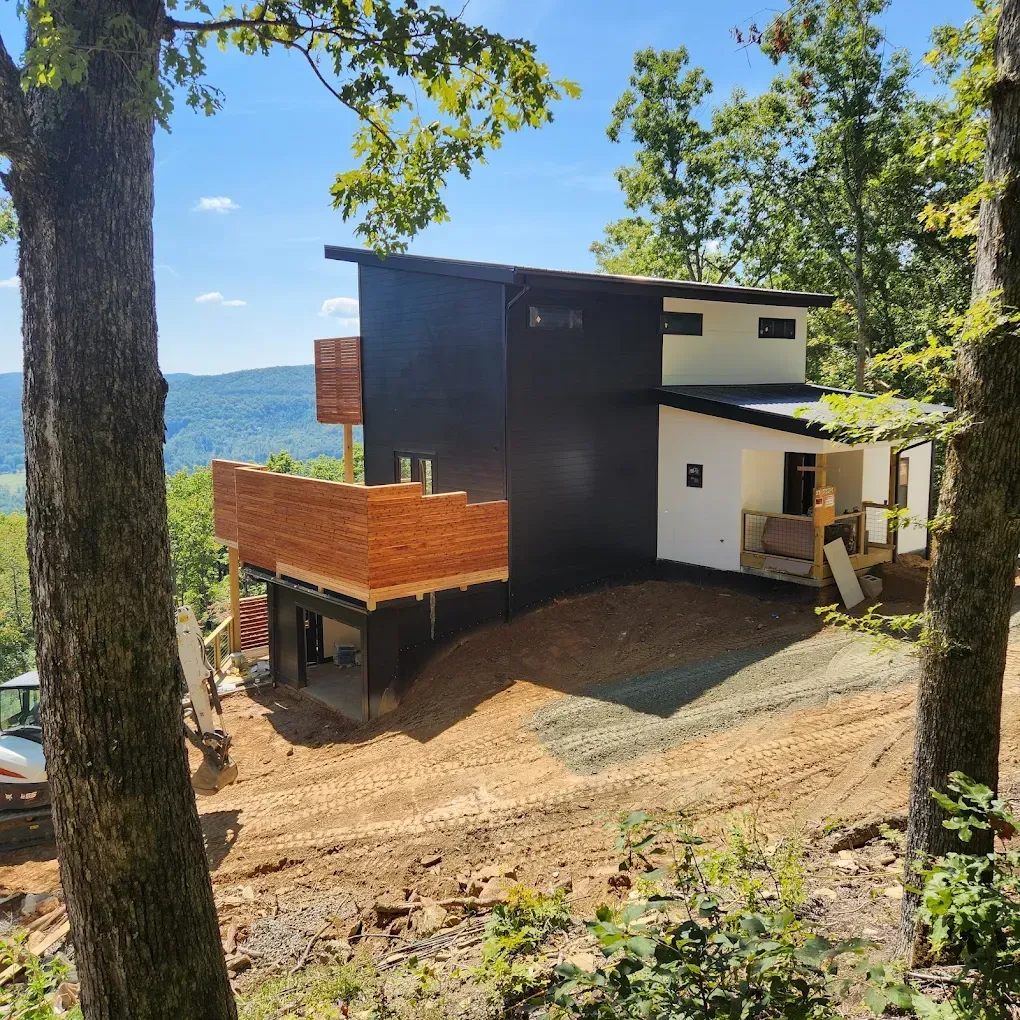
Custom residential construction tailors foundation types, drainage systems, and structural framing to the specific slope, soil composition, and exposure conditions of each building site. On sloped wooded lots common throughout mountain and suburban Asheville areas, this often means designing crawlspace heights that accommodate terrain changes, positioning floor systems to minimize tree removal while maintaining required setbacks, and orienting roof planes to manage snow load and water runoff away from foundation perimeters. Material choices for siding, roofing, and trim account for moisture exposure levels and maintenance access on multi-story elevations.
Once construction completes, you notice that interior spaces match your planned layout without compromise, that floor systems remain level and solid underfoot because framing was built to engineered specifications, and that mechanical systems operate quietly because ductwork and plumbing were routed with adequate clearance and support. Energy bills reflect insulation and air sealing quality rather than gaps left by rushed installation.
New construction services include site preparation coordination, framing and structural work, exterior envelope installation, interior finish carpentry, and final system testing. Services do not include land surveying, soil testing, or architectural design, though construction teams work from provided plans and can suggest modifications when site conditions require adjustments to original designs.
What Property Owners Want to Know
Building new homes in Western North Carolina involves decisions about foundation types suitable for mountain terrain, material durability for regional weather, and construction timelines that account for seasonal conditions.
What construction timeline should property owners expect for custom residential builds?
Timelines depend on size, site accessibility, weather windows, and inspection schedules, but framing typically follows foundation curing periods, and exterior envelope work must reach weathertight status before interior finish phases begin to protect materials from moisture exposure.
How does construction differ for wooded versus cleared building sites?
Wooded sites in Asheville require tree protection measures during construction, equipment access planning that minimizes root zone disturbance, and sometimes alternative foundation approaches when large trees affect optimal building placement on the lot.
Why are insulation and air sealing emphasized in mountain construction?
Elevation changes and temperature swings throughout Western North Carolina create conditions where inadequate insulation or air leakage leads to high heating costs, ice dam formation, and comfort problems that become apparent once homeowners occupy the space during winter months.
What determines foundation type selection for new construction?
Soil bearing capacity, slope severity, frost depth requirements, and flood zone designations all affect whether slab, crawlspace, or basement foundations are appropriate, with many mountain sites requiring crawlspace designs that accommodate terrain without excessive excavation.
How are construction materials selected for long-term durability?
Material choices consider moisture resistance, UV exposure on south-facing elevations, maintenance requirements for multi-story exteriors, and performance history in regional humidity and temperature ranges so that siding, roofing, and trim maintain appearance and function across decades of weather exposure.
Building Carolinas Construction & Remodeling plans residential construction projects that address the specific conditions of Asheville building sites and homeowner functional priorities. Contact us to discuss your new construction timeline and review site-specific design considerations.